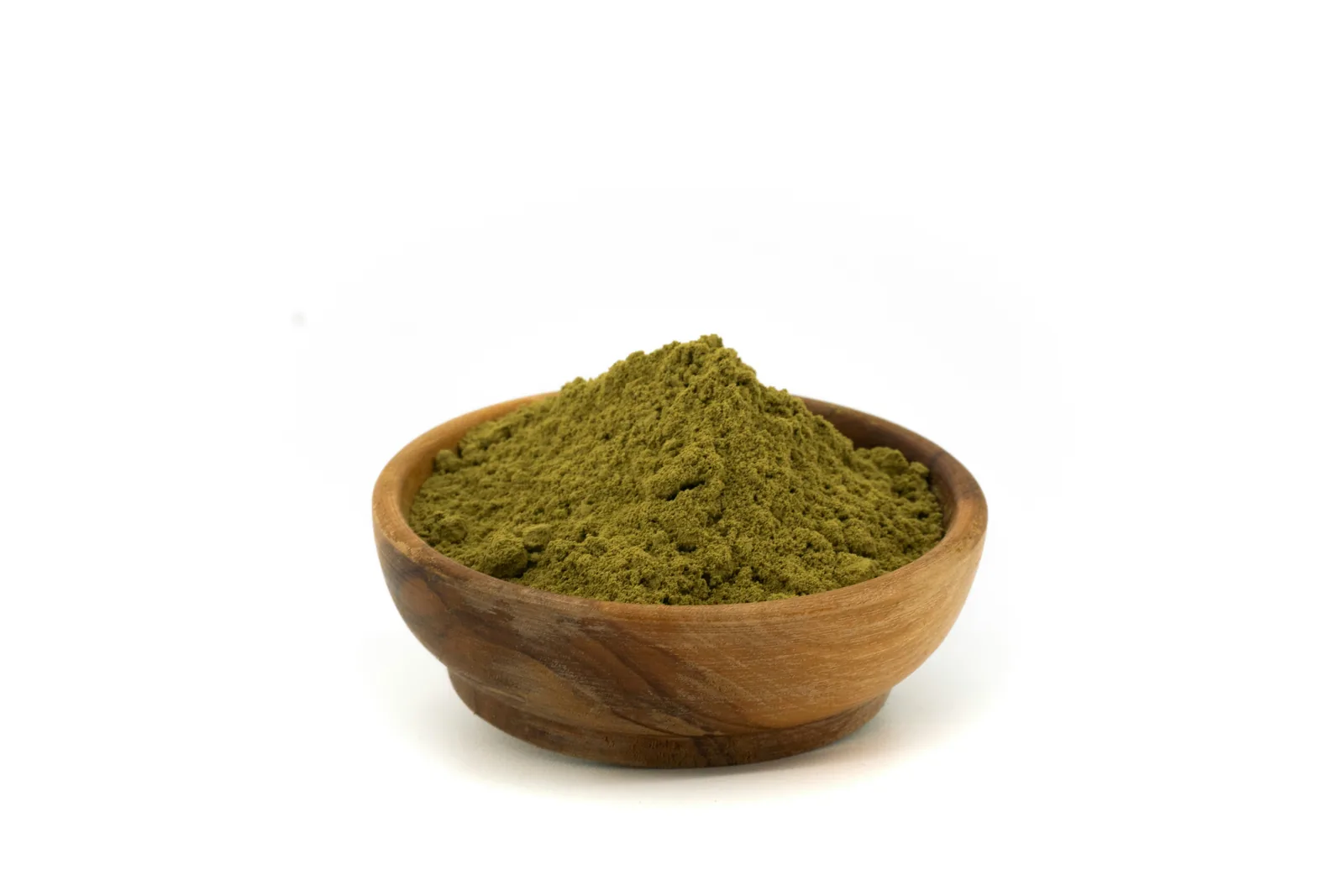
Long before "superfood" became a marketing term, moringa was already a fixture in Indian kitchens — the drumstick tree that grows easily in home gardens across the country, valued as much for practicality as for nutrition.
What it actually is
Moringa oleifera leaves, dried and ground into a fine green powder, retain much of the plant's natural nutrient density. It's part of our Gut Health & Detox range, alongside amla, wheatgrass, triphala, and fenugreek.
Simple ways to use it
- Stirred into water or buttermilk — the most traditional, straightforward approach
- Blended into smoothies — a small amount alongside fruit balances its earthy, slightly bitter flavour
- Sprinkled over dals and soups — added at the end of cooking to preserve more of its natural character
- Brewed as a tea — often blended with other herbal ingredients for a milder daily cup
Moringa's appeal was never really about novelty. It's a tree that grows easily, and a leaf that's been part of daily meals for generations.
Why sun-drying matters
Moringa leaves are delicate, and high-heat drying can noticeably dull both their colour and their natural nutrient profile. Sun-drying at lower temperatures helps the powder stay closer to the fresh leaf.
Find moringa in our Gut Health & Detox range
See the full category, including moringa alongside amla, wheatgrass, triphala, and fenugreek.
Explore Gut Health & Detox